Intent data is the digital footprint that reveals what products and services potential customers are actively researching online. Understanding intent data helps businesses identify high-value prospects at the exact moment they’re ready to buy. In this guide, we’ll explore how ad networks collect and use intent data, the technologies behind it, and how you can leverage this intelligence for your sales and marketing efforts.
1) How ad networks identify people searching for products
A. Direct signals (what you actively do)

- Search queries & site visits: If you search for “running shoes” on a search engine or visit product pages on retailers, those queries and pageviews are recorded by the search engine, publisher, or advertiser.
- Form fills, logins, and emails: If you give an email/phone to a site (newsletter, account, order), that’s strong deterministic data.
B. Tracking technologies
- Cookies & tracking pixels: Small files or 1×1 images on web pages that tell ad networks which pages you visit. Common on e-commerce and publisher sites.
- Mobile SDKs & app IDs: Apps include software-development-kits that send events (searches, product views) linked to mobile advertising identifiers (IDFA on iOS, GAID on Android).
- Browser / device fingerprinting: Collects device/browser attributes (screen, fonts, time zone) to create a unique fingerprint when cookies aren’t available.
- URL parameters & referer data: Product identifiers or search terms sometimes appear in URLs and are captured by analytics/ad scripts.
C. Cross-site / cross-app linking
- Cookie-syncing & ID graphs: Ad partners exchange identifiers (or sync hashed emails) to stitch a single identifier across sites/apps so the same user can be recognized elsewhere.
- Deterministic matching: Exact matches (e.g., hashed email) across datasets give high confidence.
- Probabilistic matching: Statistical signals (behavior patterns, IP + device) used to guess identity when exact match is absent.
2) How they turn those signals into sellable products
A. Audience segments
- Raw signals get transformed into labeled segments like “in-market: running shoes” or “interest: home mortgages.” Segments are what advertisers buy, not a spreadsheet of names (usually).
B. Data enrichment & profiling
- Data brokers combine first-party signals with other sources (purchase history, offline lists, demographics) to create richer profiles.
C. Distribution & sale channels
- Real-Time Bidding (RTB) / Ad exchanges: When a web page loads, an ad auction sends a bid request that can include user signals and segment IDs. Advertisers bid to show an ad to that user.
- Demand-Side Platforms (DSPs): Advertisers buy audience segments through DSPs using segment IDs or data-provider integrations.
- Marketplaces & data-providers: Companies sell predefined audience lists (e.g., “recent auto-intenders”) via marketplaces or APIs (historically companies like LiveRamp, Oracle BlueKai, etc.).
- Onboarding & lookalikes: Advertisers upload a customer list, a data onboarding provider hashes and matches it to online IDs to target existing customers or build lookalike audiences.
D. Delivery formats
- Segment IDs / tags: Buyers get an ID representing an audience (no raw PII) to target.
- Whitelabel lists / offline files: For direct marketing, data brokers may also sell lists (email, phone) — depending on legal rules and contracts.
3) Privacy, legal limits, and technical protections
- Hashing & pseudonymization: Email/phone often hashed before matching. This reduces direct PII sharing but can still be re-identified in some cases.
- Regulatory constraints: GDPR, CCPA and similar laws restrict processing/sale of personal data, require disclosures, and give consumers rights (access, deletion, opt-out).
- Platform rules: Major platforms (Apple, Google) limit access to persistent identifiers and restrict cross-app tracking (e.g., App Tracking Transparency for IDFA).
- Ad industry opt-outs: Industry initiatives (e.g., Global Privacy Control, IAB Transparency & Consent Framework) and ad choices pages exist to manage consent.
4) Typical lifecycle (simple example)

- You search “best hybrid bikes” and click an article.
- That publisher’s tracking pixel records the pageview and tags you as “in-market: hybrid bikes.”
- The publisher or a partner syncs that segment to an ad exchange.
- An advertiser’s DSP sees a bid request including your segment ID and bids to show you a bike ad.
- If they win, you see the ad; the advertiser pays the exchange and/or the data provider a fee for access to that audience.
5) How ad networks actually “sell” — payment & models
- CPM/CPM via RTB: Advertisers pay per thousand impressions when targeting an audience.
- Subscription / licensing: Some data providers charge recurring fees for access to a segment.
- Per-match or per-lead: For direct-response offers, brokers may charge per matched contact or per lead delivered.
- Revenue share with publishers: Publishers get paid for enabling access to their audience (via ad revenue share).
6) What you can do to reduce being targeted
- Use browser privacy modes, block third-party cookies, and use privacy extensions (uBlock Origin, Privacy Badger).
- Opt out of ad personalization: Google Ad Settings, Apple/Android ad ID reset & limit ad tracking.
- Use tracker-blocking browsers (Brave, Firefox with strict tracking protection) or a VPN.
- Exercise privacy rights under local laws (CCPA/GDPR) to request deletion or opt-out.
7) Ethical issues & risks
- Re-identification risks: Even hashed data can sometimes be linked back to people.
- Bias & fairness: Segmentation can reinforce harmful profiling (e.g., excluding groups from housing or employment ads has legal implications).
Transparency: Many users don’t know how widely their behavioral signals are shared.
How CRM Software Helps You Use Intent Data Responsibly
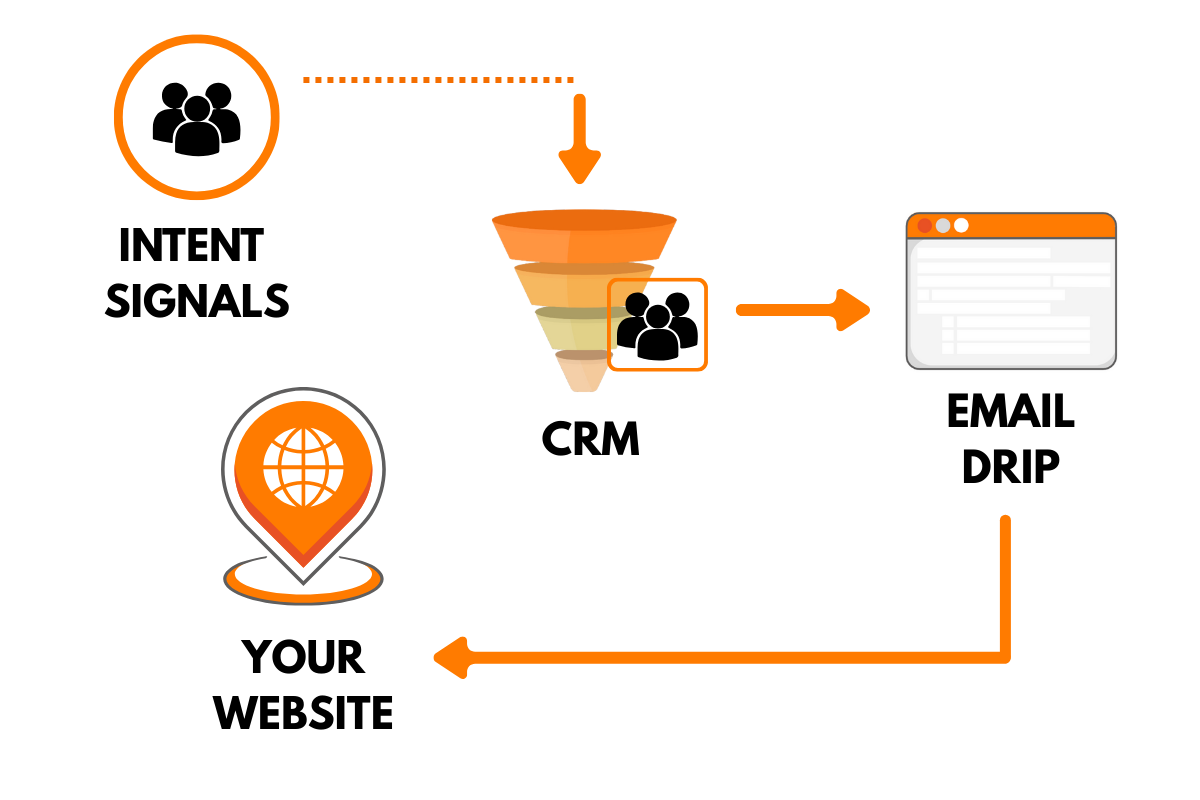
For businesses looking to act on intent data ethically and effectively, a robust CRM software solution is essential. Here’s how CRM platforms help you leverage intent data while maintaining customer trust:
- Centralized Contact Management: Store and organize prospect information gathered from intent signals in one secure location.
- Automated Follow-ups: Use marketing automation to reach prospects showing buying intent at the right moment.
- Lead Scoring: Prioritize contacts based on their demonstrated intent to focus your sales team’s efforts.
- Email Marketing Integration: Connect with interested prospects through targeted email marketing campaigns based on their behavior.
- Compliance and Consent: Maintain proper records of consent and communication preferences to stay compliant with privacy regulations.
The key to using intent data effectively is having the right tools to act on those signals quickly and appropriately. Learn more about how sales CRM solutions can help your team convert intent signals into revenue.